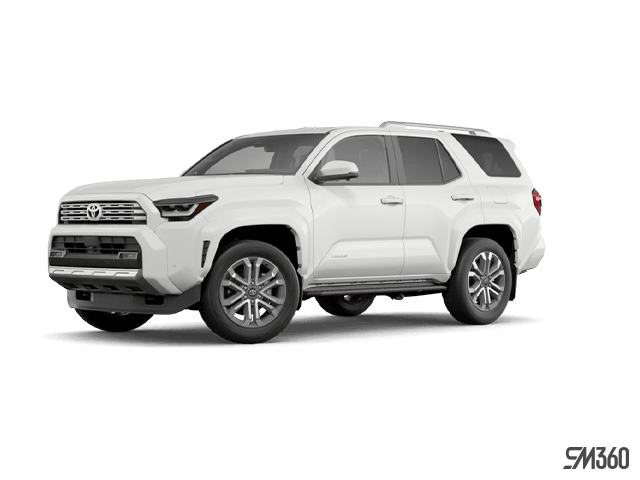
Photo for illustrative purposes only.
Find out more
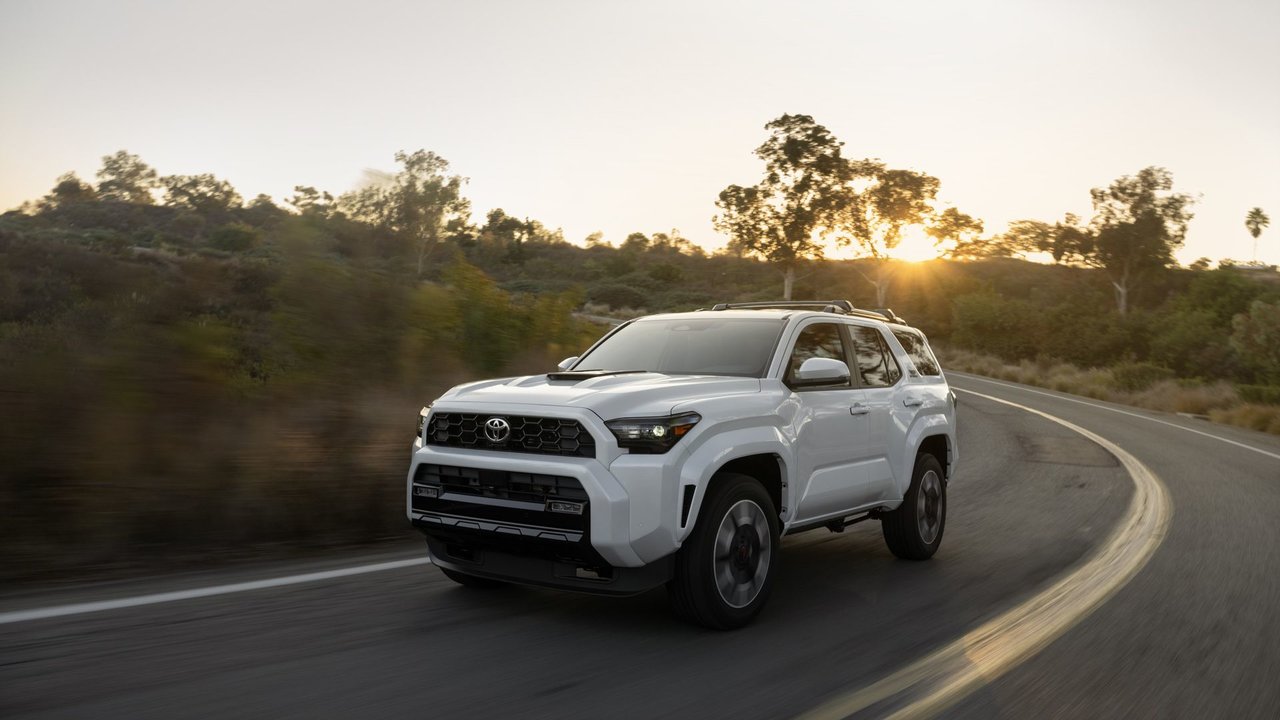
The 2026 Toyota 4Runner carries over the 2025 redesign with a choice of two powertrains, nine trim levels, and a focus on capability and versatility. If you're shopping for a body-on-frame SUV that can handle both daily driving and weekend adventures, here's what you need to know before making your decision.
The 4Runner offers two distinct powertrain options, each with its own strengths.
i-FORCE Gas: The 2.4L turbocharged four-cylinder produces 278 hp and 317 lb-ft of torque - enough for confident highway merging and towing up to 6,000 lb (2,722 kg). This powertrain returns 11.2 L/100 km combined and comes standard with seven-passenger seating. If you need maximum towing capacity and third-row seating, this is your choice.
i-FORCE MAX Hybrid: The hybrid system pairs the same 2.4L turbo with an electric motor for 326 hp and 465 lb-ft of torque - a substantial jump in low-end power that makes a difference when towing or climbing steep grades. The hybrid returns 9.9 L/100 km combined and tows up to 5,800 lb (2,631 kg). Hybrid models seat five passengers and offer 1,206 litres of cargo space behind the second row.
Both powertrains use an eight-speed automatic transmission and come with 4WD as standard. The hybrid offers either on-demand or full-time 4WD depending on the trim level, while gas models offer either part-time or full-time 4WD depending on trim.
The 2026 4Runner offers nine trims across both powertrains. Here's how they break down:
Standard Package: The entry point starts at $55,270 and includes Toyota Safety Sense 3.0, Toyota Multimedia system, 12.3-inch digital gauge cluster, power back door with kick sensor, and wireless charging. This trim gives you the core 4Runner experience without the premium add-ons.
TRD Sport: Built for buyers who want their 4Runner to look and feel sportier, the TRD Sport adds a sport-tuned suspension, 20-inch TRD alloy wheels, a hood scoop, aluminum sport pedals, and a TRD front grille. This five-passenger model includes a moonroof, heated steering wheel, and Intuitive Parking Assist with Auto Braking. Available in five colour combinations with two-tone Black and Grey interiors.
TRD Off Road Premium: For 2026, this trim now includes a trailer brake controller and digital display rear view mirror as standard equipment. This grade focuses on trail capability with features like Multi-Terrain Select, Downhill Assist Control, and Crawl Mode.
Limited 7 Passenger: The Limited is the only trim that seats seven across all three rows. It adds 20-inch Limited alloy wheels, leather upholstery, a moonroof, heated and ventilated front seats with driver's seat memory, and a JBL audio system with a removable JBL Flex portable speaker. The Panoramic View Monitor system and acoustic windshield make this the most refined 4Runner for families who need three rows. For 2026, the Limited now includes a trailer brake controller and digital display rear view mirror as standard.
Platinum: The top-tier comfort model builds on the Limited with additional luxury features and premium materials.
TRD PRO: The most capable off-road model in the lineup, designed for serious trail use.
Trailhunter: The top adventure-focused 4Runner with specialized equipment for extended backcountry trips.
|
Trim |
Seating |
Towing Capacity |
|
i-FORCE Gas (Standard, TRD Off Road Premium, Limited) |
7 |
6,000 lb (2,722 kg) |
|
i-FORCE MAX Hybrid (Standard, TRD Sport, Platinum, TRD PRO, Trailhunter) |
5 |
5,800 lb (2,631 kg) |
|
Powertrain |
Combined Fuel Economy |
Key Differentiator |
|
i-FORCE Gas |
11.2 L/100 km |
Maximum towing, third-row seating |
|
i-FORCE MAX Hybrid |
9.9 L/100 km |
Better fuel economy, more torque |

Gas Models (7-Passenger): Front legroom measures 1,062 mm (41.8 in), second-row legroom is 884 mm (34.8 in), and third-row legroom is 808 mm (31.8 in). The third row is best suited for kids or occasional adult use on shorter trips. Cargo capacity behind the second row is 1,269 litres - enough for a full grocery run plus hockey bags. With all seats folded, you get 2,381 litres of maximum cargo space.
Hybrid Models (5-Passenger): The hybrid's battery packaging reduces cargo volume slightly to 1,206 litres behind the second row, with 2,339 litres maximum. The trade-off is better fuel economy and more torque.
Every 2026 4Runner includes Toyota Safety Sense 3.0, which covers the full suite of collision warning and automatic braking systems.
The Toyota Multimedia system features wireless smartphone charging and connectivity through Service Connect, Safety Connect, Remote Connect, and Drive Connect. The 12.3-inch digital gauge cluster is standard on TRD Sport and Limited trims.
The 4Runner is built for more than pavement. Standard features include Hill-start Assist Control, a locking rear differential, and a 7-pin trailer wiring harness. The TRD Off Road Premium trim adds Multi-Terrain Select, Downhill Assist Control, Crawl Mode, and the Multi-Terrain Monitor system.
Select models offer an onboard air compressor for adjusting tire pressure on the trail, plus a 2,400-watt power outlet in the trunk and second row for running tools or camping equipment.
The Adaptive Variable Front Suspension (AVS) on hybrid models adjusts damping in real time for a balance between comfort and control. Drive Mode Select offers Custom, Sport S+, Sport, Eco, and Normal modes to match the powertrain response to your driving conditions.
|
Spec |
i-FORCE Gas |
i-FORCE MAX Hybrid |
|
Engine |
2.4L turbo four-cylinder |
2.4L turbo four-cylinder + electric motor |
|
Power |
278 hp |
326 hp |
|
Torque |
317 lb-ft |
465 lb-ft |
|
Spec |
i-FORCE Gas |
i-FORCE MAX Hybrid |
|
Fuel Economy (Combined) |
11.2 L/100 km |
9.9 L/100 km |
|
Towing Capacity |
6,000 lb (2,722 kg) |
5,800 lb (2,631 kg) |
|
Seating |
7 |
5 |
|
Spec |
i-FORCE Gas |
i-FORCE MAX Hybrid |
|
Cargo (Behind 2nd Row) |
1,269 L |
1,206 L |
|
Wheelbase |
2,850 mm (112.2 in) |
2,850 mm (112.2 in) |
|
Approach/Departure Angle |
18°/23° |
18°/23° |
The 2026 4Runner gives you a clear choice: maximum towing and third-row seating with the gas powertrain, or better fuel economy and more torque with the hybrid. Both deliver the same off-road capability and Toyota build quality.
If you need seven seats and plan to tow close to the maximum capacity, the i-FORCE gas model makes sense. If you prioritize fuel savings and low-end torque for trail driving, the i-FORCE MAX hybrid is the better fit. Either way, you're getting a body-on-frame SUV that's built to last.
Photo for illustrative purposes only.
Find out more
What the 2026 Toyota Tundra Double Cab SR 4X2 Can Carry
A work truck lives or dies on two numbers: how much weight it carries in the box, and how much it pulls behind it. The 2026 Toyota Tundra Double...
Read more
Does Every 2027 Toyota Corolla Grade Get Blind Spot Monitor?
If you’re comparing 2027 Corolla grades in Quebec, one detail decides a lot: not every grade includes Blind Spot Monitor. This is a...
Read more
How Does the 2026 Toyota Corolla Hybrid Keep Commuting Costs Low?
Sitting in stop-and-go traffic is where most fuel gets burned and most patience gets tested. For Quebec commuters who spend their week idling at...
Read morePowered and developed by
